jaicompris.com
Cours et exercices corrigés en vidéo
Vous voulez me soutenir ?
Cliquez sur l'image !
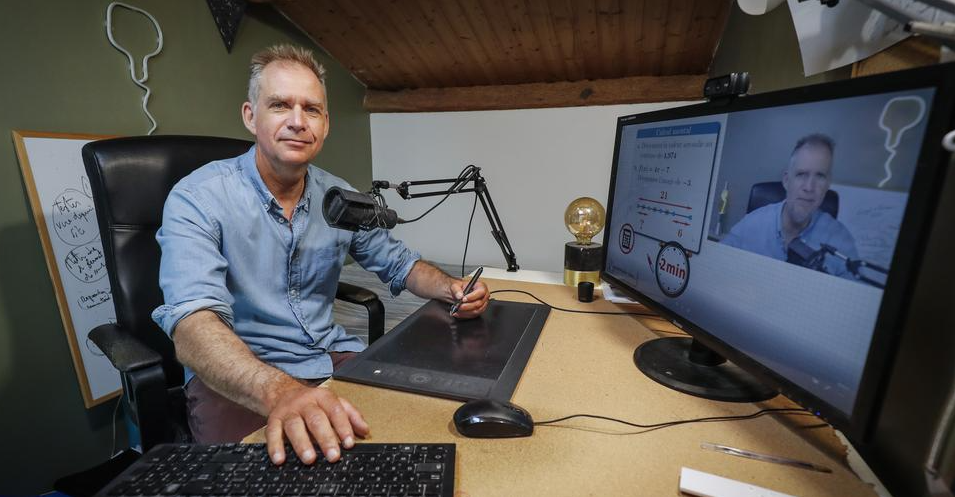
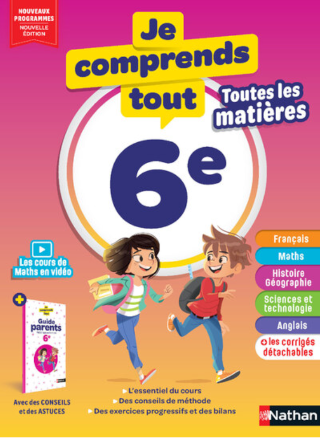
J'ai réalisé les vidéos de maths de cet ouvrage !
Des milliers de cours et d'exercices en vidéo, comme avec un professeur particulier. La programmation Python expliquée pas à pas. Apprends les mathématiques à ton rythme avec des ressources innovantes. Que tu sois en difficulté ou déjà à l'aise, tu trouveras des exercices adaptés à ton niveau pour progresser rapidement.
: It is typically performed in a closed or open circle or a semi-circle, with dancers often holding each other by the shoulders ( shoulder hold ) to maintain stability during rapid movements.
In the villages of Oltenia, the Sârba is a "living dance"—it isn't just for the stage but remains and communal celebrations. It functions as a display of vitality and social cohesion, where the ability to keep up with the increasing tempo is a mark of pride. Historically, the name Sârba ("Serbian-like") hints at the deep cross-cultural "mish-mosh" of the Balkans, though the dance has evolved into a uniquely Romanian expression. Romanian Sârba dance - The Eliznik pages
: It features a "lively 3-measure structured" pattern. Dancers execute quick lateral steps, stamps, and high-energy "shaking" movements of the feet.
The is one of the most explosive and technically demanding folk dances in Romania, serving as a high-octane symbol of the Oltenia region's spirited identity. Unlike the more meditative Hora , the Sârba from this southern province is defined by its blistering speed, intricate footwork, and aggressive rhythmic syncopation. Choreographic Profile
: While often written in a 2/4 meter , the melody frequently uses triplet groupings ( ), creating a driving feel that pushes the tempo.
: In Oltenia, a leader often shouts commands ( strigături ) to signal changes in figures, adding a layer of improvisational chaos and vocal energy to the performance.
The Oltenian variant distinguishes itself through its formation and intensity:
: It is traditionally led by a fiddle or shepherd’s flute , though modern versions heavily feature the accordion and clarinet , which are capable of handling the rapid-fire ornamentation typical of the region. Cultural Significance
: It is typically performed in a closed or open circle or a semi-circle, with dancers often holding each other by the shoulders ( shoulder hold ) to maintain stability during rapid movements.
In the villages of Oltenia, the Sârba is a "living dance"—it isn't just for the stage but remains and communal celebrations. It functions as a display of vitality and social cohesion, where the ability to keep up with the increasing tempo is a mark of pride. Historically, the name Sârba ("Serbian-like") hints at the deep cross-cultural "mish-mosh" of the Balkans, though the dance has evolved into a uniquely Romanian expression. Romanian Sârba dance - The Eliznik pages
: It features a "lively 3-measure structured" pattern. Dancers execute quick lateral steps, stamps, and high-energy "shaking" movements of the feet.
The is one of the most explosive and technically demanding folk dances in Romania, serving as a high-octane symbol of the Oltenia region's spirited identity. Unlike the more meditative Hora , the Sârba from this southern province is defined by its blistering speed, intricate footwork, and aggressive rhythmic syncopation. Choreographic Profile
: While often written in a 2/4 meter , the melody frequently uses triplet groupings ( ), creating a driving feel that pushes the tempo.
: In Oltenia, a leader often shouts commands ( strigături ) to signal changes in figures, adding a layer of improvisational chaos and vocal energy to the performance.
The Oltenian variant distinguishes itself through its formation and intensity:
: It is traditionally led by a fiddle or shepherd’s flute , though modern versions heavily feature the accordion and clarinet , which are capable of handling the rapid-fire ornamentation typical of the region. Cultural Significance
Découvre la puissance de Python pour résoudre des problèmes mathématiques.
Rejoins des milliers d'élèves qui ont déjà amélioré leurs résultats en mathématiques