Enhanced/Dual Powered
Willem EPROM Programmer
User Guide
Main Board / Cables
Main Board PCB3.5
Main Board PCB4E

Main Board PCB5.0

Main Board PCB5.5C

|
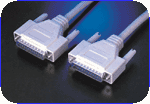
Parallel Data Cable (Printer extension cable, with male-female 25 pin connector, and pin to pin through) |
A-A type USB cable(for power) |
|
|
|
Optional Items:
|
ATMEL 89 Adapter |
ATMEL PLCC 44 Adapter |
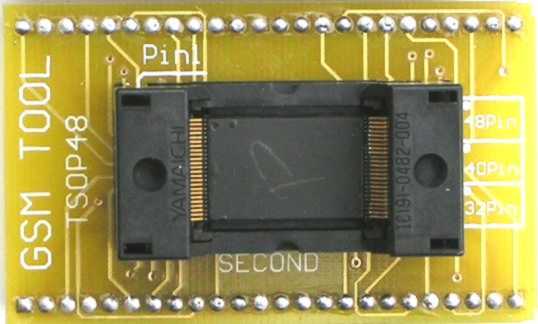
TSOP 48 Adapter |
|
|
|
|
|
FWH/HUB PLCC32Adapter |
PLCC32 Adapter |
SOIC Adapter(Simplified) |
|
On-Board |
On-Board |
|
|
AC or DC Power Adapter (9V or 12V, 200mA) |
SOIC Adapter(Professional) |
|
|
|
|
|
Essential for reaching high platforms and carrying the team over gaps.
The defining feature of Sonic Heroes is its . Instead of controlling a single character, you manage a trio in real-time, switching between three specific roles to navigate obstacles:
The leader for traversing loops and using homing attacks. Sonic Heroes
The Ultimate Retrospective: Why Sonic Heroes Still Matters In the early 2000s, Sega was at a crossroads. Having recently transitioned into a third-party developer, they needed a game that could reintroduce their mascot to a multi-platform audience. Enter , a title that traded the gritty, complex narratives of Sonic Adventure 2 for a bright, frantic, and experimental team-based experience.
Shadow (returning after his "death" in SA2 ), Rouge, and the new powerhouse robot E-123 Omega, all seeking revenge or answers. Essential for reaching high platforms and carrying the
Whether you’re a lifelong fan or a newcomer curious about the "blue blur," here is a deep dive into the colorful chaos that is Sonic Heroes . 1. The Core Gimmick: Strength in Numbers
This "rock-paper-scissors" style of gameplay was a bold departure from previous 3D entries, focusing more on mastered environmental navigation than just pure speed. 2. Meet the Teams The Ultimate Retrospective: Why Sonic Heroes Still Matters
The game features 12 playable characters split into four distinct teams, each with their own campaign and difficulty level:
Hardware Installation & Configuration
|
Installation Steps
(Note: the LPT port of PC MUST set to ECP or ECP+EPP during BIOS setup. To enter the BIOS setting mode, you need press "Del" key or "F1" key during the computer selftest, which is the moment of computer just power up.)
Software Version To Use | |||
| |||
|
| |||
|
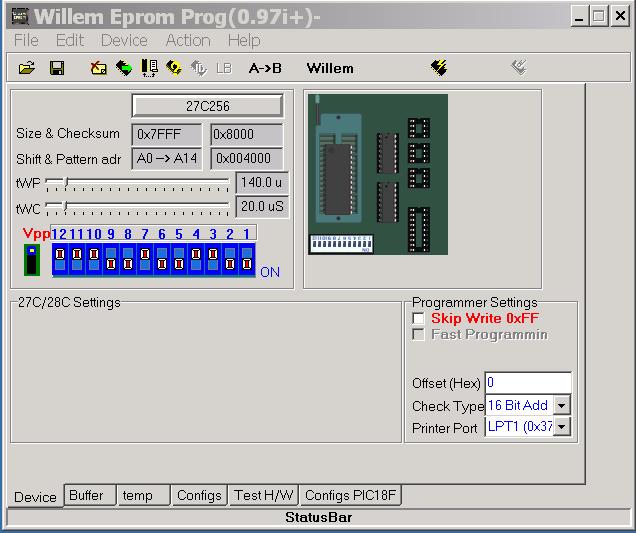
The software interface:
| |||
|
| |||
|
Hardware
Check
| |||
|
PCB3.5/PCB4E
PCB5.0
PCB5.5C
Note: the Vcc setting jumper only has effect when you are using AC adaptor as power source. For the USB power only 5V Vcc is available. For the PCB5.5C, set DIP steps: 1. press DIP Set button twice to check current DIP bit position. Then set it again for ON or OFF. 2. press DIP Bit shift button to shift the DIP bit position to where need to set. And then press DIP Set button twice to check current DIP bit position. Then set it again for ON or OFF. 3. Repeat those steps till all DIP bit ae set same as software indicated. For PCB5.5C voltage and Special chip selection: 1. Put back the safety jumper. 2. Press the voltage button and hold for 1 second, the voltage LED should move to next. Repeat till desired voltage LED light up. 3. Press the chip selection button and hold for 1 second, the chip LED should move to next. Repeat till desired LED light up. 4. Remove the safety jumper to lock the selected voltage and chip selection
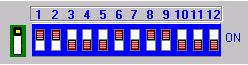
DIP Switch (PCB3.5, PCB5.0)
When programming one chip, follow the program prompt to set DIP switch .
|
Essential for reaching high platforms and carrying the team over gaps.
The defining feature of Sonic Heroes is its . Instead of controlling a single character, you manage a trio in real-time, switching between three specific roles to navigate obstacles:
The leader for traversing loops and using homing attacks.
The Ultimate Retrospective: Why Sonic Heroes Still Matters In the early 2000s, Sega was at a crossroads. Having recently transitioned into a third-party developer, they needed a game that could reintroduce their mascot to a multi-platform audience. Enter , a title that traded the gritty, complex narratives of Sonic Adventure 2 for a bright, frantic, and experimental team-based experience.
Shadow (returning after his "death" in SA2 ), Rouge, and the new powerhouse robot E-123 Omega, all seeking revenge or answers.
Whether you’re a lifelong fan or a newcomer curious about the "blue blur," here is a deep dive into the colorful chaos that is Sonic Heroes . 1. The Core Gimmick: Strength in Numbers
This "rock-paper-scissors" style of gameplay was a bold departure from previous 3D entries, focusing more on mastered environmental navigation than just pure speed. 2. Meet the Teams
The game features 12 playable characters split into four distinct teams, each with their own campaign and difficulty level: