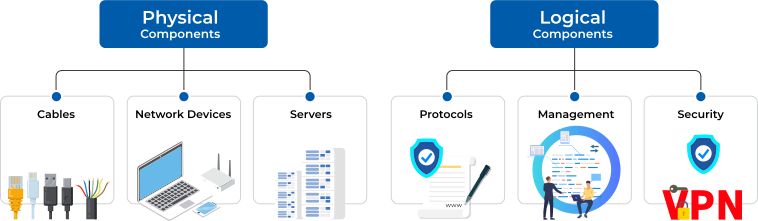
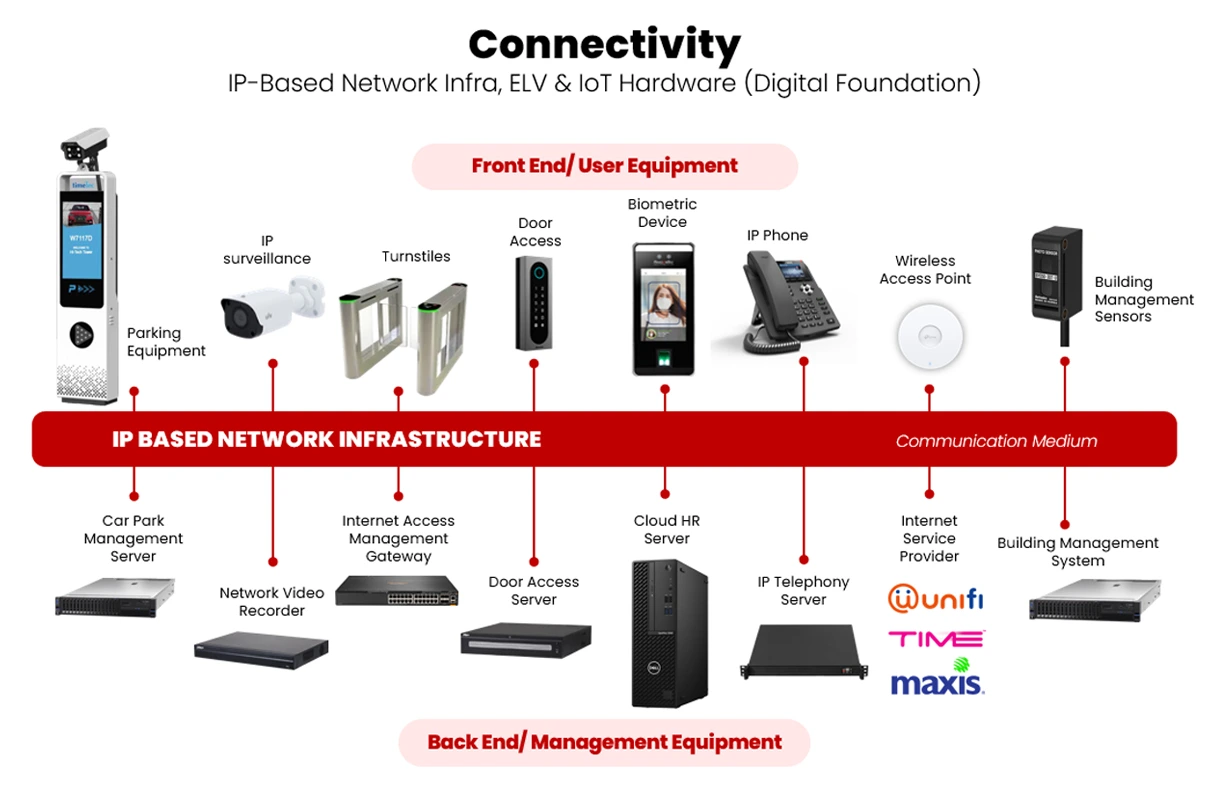
TimeTec offers complete Network Infrastructure solutions alongside our comprehensive PropTech ecosystem, delivering seamless connectivity to support smart building operations. From structured cabling to high-performance network equipment, our infrastructure services are designed to integrate flawlessly with TimeTec’s PropTech solutions—including smart access and elevator control, ELV & IoT automation, smart cashless and touchless parking, visitor management and etc., ensuring a reliable, scalable, and future-ready environment for modern commercial and residential buildings.
What Is a Well-Designed Network Infrastructure?
A well-designed network infrastructure is essential for any organization that relies on technology to operate effectively. It provides the foundation for integrating emerging technologies and new applications, allowing businesses to remain agile, up-to-date, and competitive in their industries.
For service providers, building a robust network infrastructure means ensuring scalability, high availability, and intelligent load balancing. These elements are critical to maintaining seamless connectivity and reliable system performance—key factors in today’s fast-paced digital environment.
Since network interruptions can never be entirely avoided, it's also vital to adopt streamlined network architectures and automated management tools. These help network administrators quickly identify, isolate, and resolve issues, minimizing downtime and ensuring optimal network functionality.
: Beyond sports, these rodeos provide a safe space to discuss gender and sexuality, often incorporating "campy" or subversive elements that challenge traditional hypermasculine norms.
: Historical artifacts, such as 19th-century limericks, allude to homosexual intimacy on the range, suggesting that the "straight" cowboy image is a later cultural construction. 2. The International Gay Rodeo Association (IGRA)
: Founded by Phil Ragsdale in Reno, Nevada, in 1976, the first gay rodeo was a fundraiser for local charities. The International Gay Rodeo Association (IGRA) was later formed in 1985 to standardize the circuit.
: Historians note that in isolated male communities (including loggers and miners), same-sex intimacy was often an act rather than a fixed identity, allowing men to maintain their masculine status while engaging in homosexual behavior.
The gay rodeo emerged in the late 1970s as a way for LGBTQ+ individuals to reclaim their rural and American identities.
Despite the "lone ranger" myth, historical cowboys often relied on partners for survival in the hostile wilderness, forming intense emotional and sometimes physical bonds.
Gay Cow Boys Fucking -
: Beyond sports, these rodeos provide a safe space to discuss gender and sexuality, often incorporating "campy" or subversive elements that challenge traditional hypermasculine norms.
: Historical artifacts, such as 19th-century limericks, allude to homosexual intimacy on the range, suggesting that the "straight" cowboy image is a later cultural construction. 2. The International Gay Rodeo Association (IGRA)
: Founded by Phil Ragsdale in Reno, Nevada, in 1976, the first gay rodeo was a fundraiser for local charities. The International Gay Rodeo Association (IGRA) was later formed in 1985 to standardize the circuit.
: Historians note that in isolated male communities (including loggers and miners), same-sex intimacy was often an act rather than a fixed identity, allowing men to maintain their masculine status while engaging in homosexual behavior.
The gay rodeo emerged in the late 1970s as a way for LGBTQ+ individuals to reclaim their rural and American identities.
Despite the "lone ranger" myth, historical cowboys often relied on partners for survival in the hostile wilderness, forming intense emotional and sometimes physical bonds.