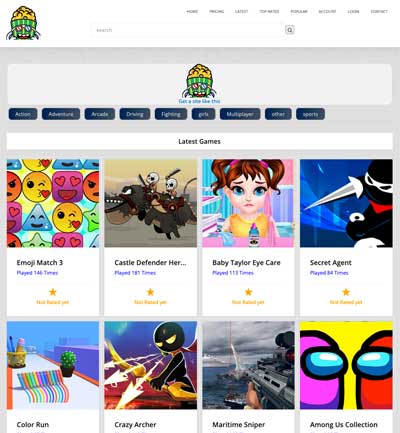
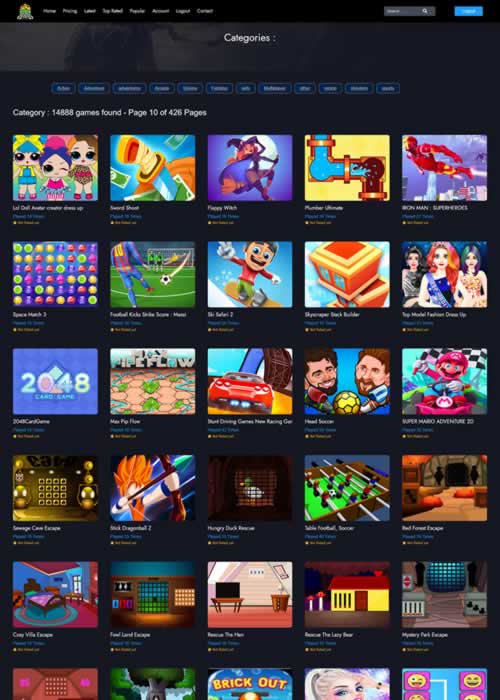
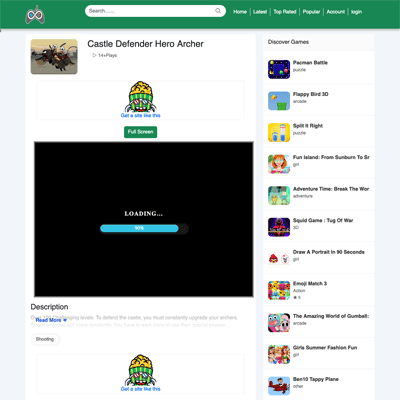
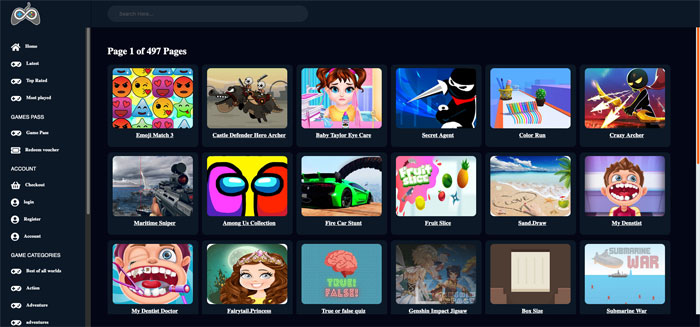
Please Note: Games are from a CDN So these are not open source
Scan to Open demo on Mobile or Tablet
This purchase includes, All games preloaded and every theme
NEW FEATURE(BETA), DDOS Protection
Your site will be exactly the same as the demo, you just tweak your desired look, branding, and your own ads.
You need your own domain name and web hosting
Allows users to play HTML5 games straight in their browser without installing anything.
You can set games for free access or monthly pass.
You can add your games by directly uploading and importing from other sites
12,000+ games can be automatically added on installation.
Or you can choose to have an empty site and add your own games.
You can get your games from the web, including Codecanyon Fiverr, and more.
Change your design with one click.
6 Themes are included that can be changed with a single click in the admin panel
Monetize with AdSense or another ad provider.
Display Ads on your site to earn money.
You choose ads to use on each page.
You can show ads between games list
For example after 6 tiles are shown it will show an ad.
You can change 6 to any number to anything you like.
You can test the games by logging in with this test account with an active subscription..
Username:
123Password:
123